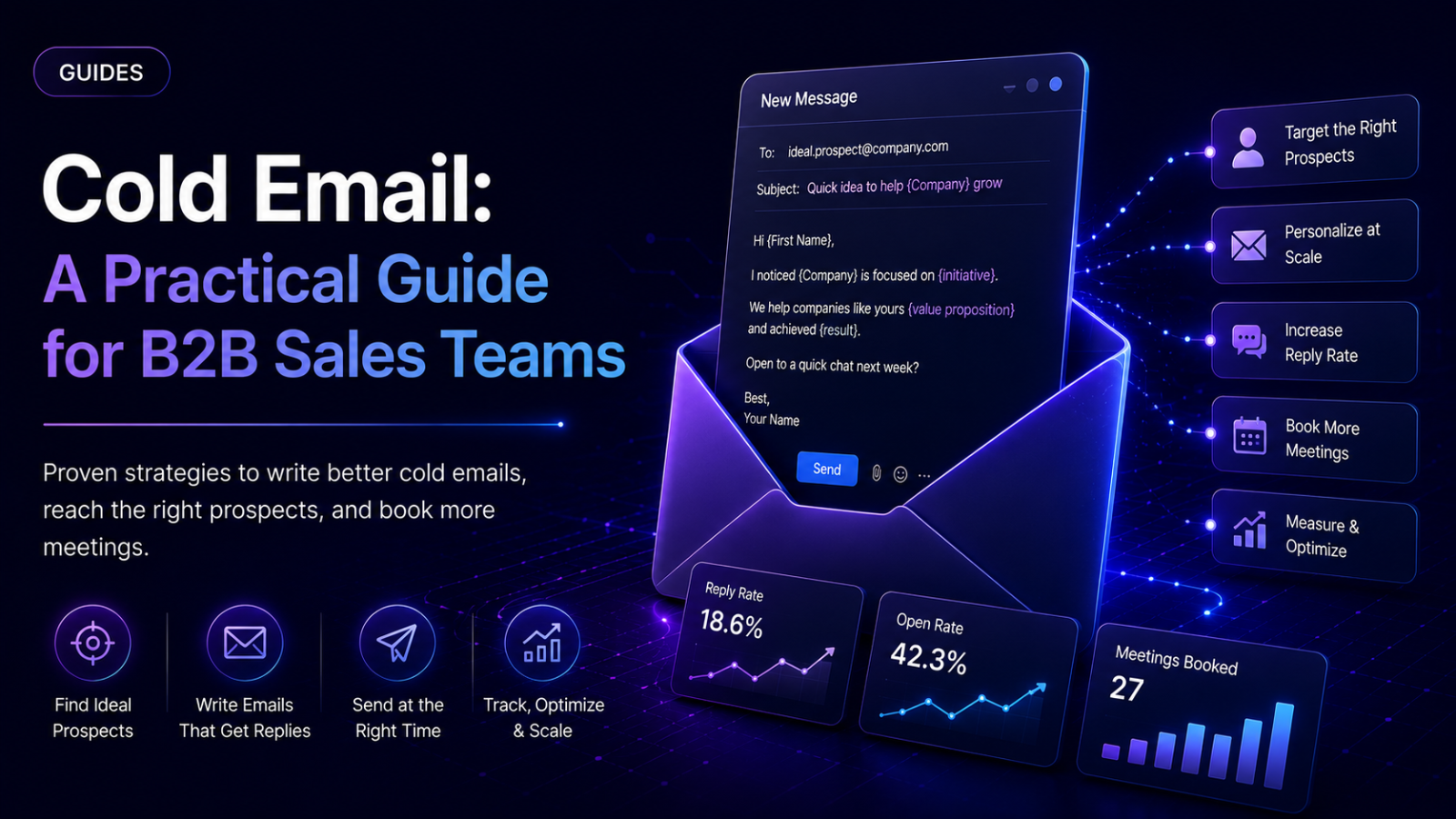
Cold Email: A Practical Guide for B2B Sales Teams
What Cold Email Means and When It Matters
Cold email is a highly targeted and personalized form of outreach where you contact potential customers who have no prior relationship with your company. This tactic is particularly effective in B2B sales, where building relationships takes time and the sales cycle is often long and complex.
Cold email works because it allows you to:
- Reach a large number of potential customers with a single campaign
- Personalize your message to address the specific needs and pain points of each prospect
- Track and measure performance to continuously improve your strategy
However, cold email is not a one-size-fits-all solution. It requires careful planning, execution, and follow-up to be successful.
The Workflow: How to Apply Cold Email Step by Step
A successful cold email campaign involves several key steps:
Research and List Building
Identify your ideal customer profile (ICP) and build a list of potential contacts. This involves:
- Defining your ICP: Understand the characteristics of your best customers, such as company size, industry, job title, and pain points.
- Finding potential contacts: Use tools like LinkedIn Sales Navigator, Hunter, or Datanyze to find contacts that match your ICP.
- Verifying email addresses: Use tools like EmailListVerify or ZeroBounce to ensure that your email addresses are valid and up-to-date.
Crafting Your Email
Your cold email should be:
- Personalized: Address the recipient by name and reference their company or specific challenges.
- Concise: Keep your email brief and to the point, focusing on the value you can offer.
- Clear: Make sure your email is easy to read and understand, with a clear call-to-action (CTA).
Sending and Tracking
Send your emails and track key metrics such as:
- Open rates: The percentage of recipients who open your email.
- Click-through rates (CTR): The percentage of recipients who click on a link in your email.
- Response rates: The percentage of recipients who respond to your email.
Follow-up
If you don’t get a response, consider sending follow-up emails to increase your chances of getting a reply. This involves:
- Deciding on the number of follow-ups: Typically, 2-3 follow-ups are sent, spaced out by a few days.
- Changing your approach: Try different subject lines, CTAs, or messaging to see what works best.
Common Failure Modes and How to Avoid Them
Despite its potential, cold email can be fraught with challenges. Here are some common failure modes and how to avoid them:
Low-Quality Lists
Using low-quality lists can lead to low open rates, high bounce rates, and damage to your sender reputation.
- Solution: Invest in high-quality list building and verification tools.
Poorly Crafted Emails
Emails that are not personalized, concise, or clear can be easily ignored.
- Solution: Take the time to craft well-written, personalized emails.
Lack of Follow-up
Not following up with non-responsive prospects can mean missing out on potential opportunities.
- Solution: Have a clear follow-up strategy in place.
A Practical Outflo Example
Outflo is a cold email automation tool that helps you streamline your outreach process. Here’s how it can help:
Automating Manual Tasks
Outflo automates tasks such as:
- Email sending: Send personalized emails to your prospects with ease.
- Follow-up emails: Set up automated follow-up sequences to increase your chances of getting a response.
- Tracking and analytics: Get insights into your campaign performance and make data-driven decisions.
Improving Efficiency
By automating manual tasks, Outflo frees up your time to focus on high-value activities such as:
- Strategy and planning: Develop a clear cold email strategy and plan your campaigns.
- Relationship building: Build relationships with your prospects and customers.
Comparison with Other Tools
Checklist and Next Steps
To get started with cold email, follow these steps:
1. Define your ICP: Understand the characteristics of your best customers.
2. Build a list of potential contacts: Use tools like LinkedIn Sales Navigator or Hunter.
3. Craft a personalized email: Keep it concise, clear, and focused on the value you can offer.
4. Send and track your emails: Use tools like Outflo to automate and track your campaigns.
5. Follow up: Set up automated follow-up sequences to increase your chances of getting a response.
By following these steps and using tools like Outflo, you can create a successful cold email strategy that drives real results for your B2B sales team.